
A New Study on Blood Culture Diversion Just Dropped. Here's What It Means for Your Lab.
A June 2026 study shows ISDDs deliver — and reveals where the real battle is being fought.
by Shanise Keith • June 15, 2026
A study published in Microbiology Spectrum on June 9, 2026 is adding new weight to a question the laboratory community has been circling for years: why aren’t initial specimen diversion devices standard everywhere?
The study, authored by Dolin and colleagues, took a real-world look at what happens when you introduce the Kurin Lock — a small, passive blood diversion device — across three distinct hospital units: an Emergency Department (ED), a Cardiothoracic ICU (CTICU), and a Medical ICU (MICU). Over six months before and six months after implementation, they tracked blood culture contamination rates and asked a straightforward question: does this thing work in the messy, variable reality of everyday patient care?
The short answer is yes — with some important nuances.
Overall, contamination dropped by 35.3% after the Kurin Lock was introduced. The ED saw a 41% reduction and hit below the 1% contamination benchmark during multiple months. The MICU told an even more compelling story: when researchers looked specifically at cultures drawn with the device, contamination came in at just 0.39% — compared to 3.02% in draws done without it. The device was estimated to have avoided approximately $170,378 (which would be $340,000+ annually) in contamination-related costs, using a cost-per-contamination figure of $6,553 from a prior meta-analysis.

But here is where it gets interesting, and where the post-publication conversation will likely focus: compliance varied dramatically by ward. The ED used the device 62.5% of the time. The CTICU just 32.2%. The MICU 35.4%. The CTICU, notably, never achieved the <1% benchmark and showed no statistically significant contamination reduction overall. The authors are transparent about this: the device works, but only when staff actually use it.
That is not a device problem. That is a training and culture problem — and it’s one phlebotomy educators and laboratory leaders need to understand in order to keep contamination rates low.
I’ve Been a Fan for a Long Time
If you perform blood culture collection, you understand how carefully the procedure has to be performed. From the extra thorough skin antisepsis, to cleansing the tops of the culture bottles, to being careful not to even breathe on the site you just scrubbed to avoid contamination — you understand the weight of this issue. Blood culture contamination isn’t just a quality metric on a dashboard. It means a patient may spend extra days in the hospital. It means antibiotics they don’t need. It means clinical staff chasing a ghost — a false-positive result that sends everyone down the wrong path.
At my hospital they implemented sterile gloves and surgical masks to try to prevent contamination. The gloves helped with people who tended to touch surfaces they weren’t supposed to, and the mask helped prevent mouth flora, which had shown up in false positives. These are helpful measures, but they don’t fix everything.
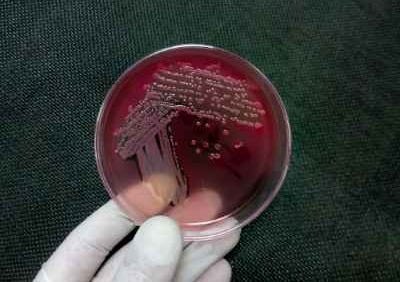
Initial specimen diversion devices solve a problem that even perfect technique can’t fully eliminate. Here’s why: no matter how meticulous your skin antisepsis, that first millimeter or two of blood after needle insertion carries a micro-plug of skin cells, surface bacteria, and debris from the puncture site. You can’t scrub that away. But you can divert it — physically route it away from the culture bottle before it has the chance to contaminate your specimen.
Despite nearly a decade of evidence and a growing body of research, ISDDs remain far from standard practice. Magnolia Medical — the pioneer in this space — counted adoption at nearly 500 U.S. hospitals in 2024. Out of roughly 6,100 facilities nationwide, that's a fraction. Most facilities drawing blood cultures today are still doing it the old way.
I believe every facility drawing blood cultures should be using an ISDD. The evidence supports it. The math supports it. And frankly, in a healthcare landscape where we obsess over quality metrics and patient safety initiatives, the question shouldn’t be whether to use a diversion device — it should be which one and how do we get compliance up.
First, Let’s Talk About SteriPath.
Many of you have probably heard of SteriPath, made by Magnolia Medical Technologies — now co-marketed in partnership with BD. It was the pioneer in this space, the original commercially available ISDD, and it has the deepest clinical evidence base of any device in this category. Twenty studies support its use, and across those studies it has consistently driven contamination rates to 1% or below.
The original SteriPath works by mechanically diverting and sequestering the first 1.5 to 2 mL of blood into a sealed chamber before allowing blood to flow into the culture bottles. It operates as a closed, vein-to-bottle sterile system and integrates with BD Vacutainer push-button blood collection sets. The Gen2 version, released in 2018, refined usability with a single-step activation design.
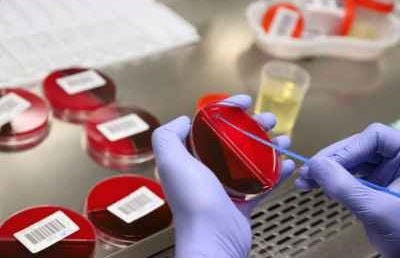
In 2020, Magnolia answered one of the most practical criticisms of the standard SteriPath — that 1.5 to 2 mL is a significant blood volume to divert in patients who can’t afford to lose it — by launching the SteriPath Micro. Designed in close collaboration with leading pediatric and adult hospitals, the Micro diverts less than 1 mL of blood and is specifically engineered for patients with low blood volume or difficult venous access. Think your tiny veins in the NICU, your oncology patients, your elderly patients with fragile, rolling vessels. For those populations, losing nearly 2 mL to a diversion chamber on every blood culture draw isn’t trivial — and the Micro addresses that directly. An expanded family of 19 Micro configurations received additional FDA 510(k) clearance in 2023, giving facilities a wide array of needle and collection configurations to match their protocols. Click here to see a video about the SteriPath Micro.
Both SteriPath and SteriPath Micro still require the user to physically activate the diversion — there’s a button involved. When used correctly, this is a minor step. But in the real world of busy EDs and ICUs, along with staff who may not understand the purpose of the blood diversion, any extra action in a workflow is an opportunity for someone to skip it. That’s not a knock on the device; it’s just an honest observation about human behavior in high-pressure clinical environments.
So How Does the Kurin Lock Compare?
The Kurin Lock, made by Kurin Inc. out of San Diego, takes a fundamentally different mechanical approach. Rather than actively diverting blood through user activation, the Kurin passively sidelines only the first 0.15 mL into a small flash chamber — no button, no squeeze, no activation step. The collector draws blood exactly as they always would, and the device handles diversion automatically.
Kurin has since expanded its line as well. The Kurin Jet, launched in 2023, is a newer ventless passive device that builds on the same no-activation concept. The original Kurin Lock is now called the Kurin Flash within the product family. In less than a decade, this space has gone from a single pioneering device to a full competitive market — a sign of both clinical urgency and growing demand. Click here to see all the info about this device, including a video.
When it comes to effectiveness, both devices work. The best head-to-head comparison data available found device-specific contamination rates of 0.68% for Kurin and 0.8% for SteriPath when the devices were actually used — essentially equivalent outcomes. Where the real-world gap shows up is compliance, and that gap is significant. In user experience surveys from that head-to-head study, SteriPath was rated worse than the standard of care by 73% of users compared to just 30% for Kurin, with the activation requirement being the primary sticking point. People preferred not having to push a button.
The Bottom Line.
The Dolin et al. study is valuable not because it reveals something we didn’t know, but because it confirms it in a messy, real-world multi-ward setting where compliance is imperfect and conditions aren’t controlled. ISDDs work. They work even when they’re used inconsistently. Imagine what happens when you get compliance up.
The CLSI has set a target of less than 1% for blood culture contamination. The CDC echoes that benchmark. Facility after facility using these devices — regardless of which brand — is hitting that number. Some are getting below it. One health system reported dropping from 2.85% to under 1% after switching devices, with estimated additional annual savings of $4.9 million from that change alone.
Under 3% was once considered acceptable. Under 1% is now the goal. And based on the evidence, it’s not just achievable — it’s expected.
If your facility is still drawing blood cultures without a diversion device, this study is your nudge. The device works. The data is there. The question now is whether leadership is ready to prioritize it — and whether your phlebotomy and nursing teams are trained and empowered to use it consistently.
Because as the Dolin study makes clear: the device is only as good as the hands that use it.
Related Posts and Information
overall rating: my rating: log in to rate
ISDD Initial Specimen Diversion Device blood culture contamination magnolia medical